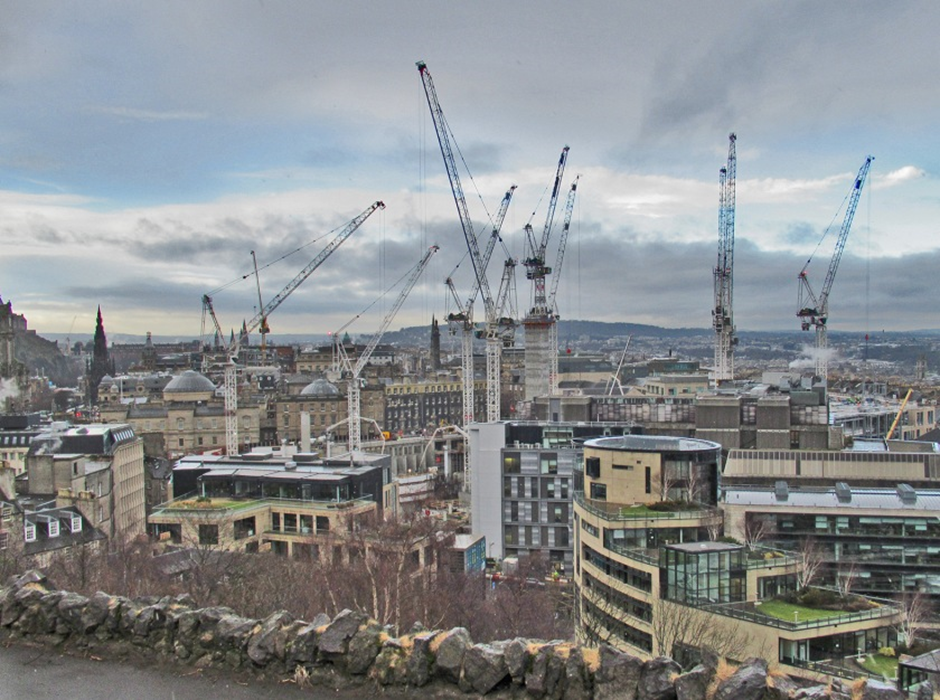
The impact of construction is a key issue for local communities, leading to negative impacts on quality of life, complaints to the Council and potential disruption to worksites.
Whilst the Code of Conduct is not mandatory and will not be enforced, it does set out expectations and best practice for constructors as well as highlighting legal responsibilities governed by legislation and regulation. It is also intended to assist the construction industry in carrying out works safely, efficiently, responsibly and on time.
As a general rule noisy work from construction sites should usually only disturb you Monday to Saturday 7am to 7pm. There are some exemptions to this and other restrictions which may apply.
Good relations with neighbours and a clear communication strategy will greatly assist in reducing the impact of construction.
Disruption may be unavoidable, but the impact will be reduced if neighbouring occupiers are consulted and kept informed throughout the works. This may be through a residents’ association, community council, ward councillors or, preferably, directly with neighbours.
A series of new and revised non-statutory planning guidance to provide additional information on the policies of City Plan 2030 and National Planning Framework 4 is now live.
The guidance is provided to assist those considering proposals for development and will be used as a material consideration in the determination of planning applications.
The new guidance is listed below:
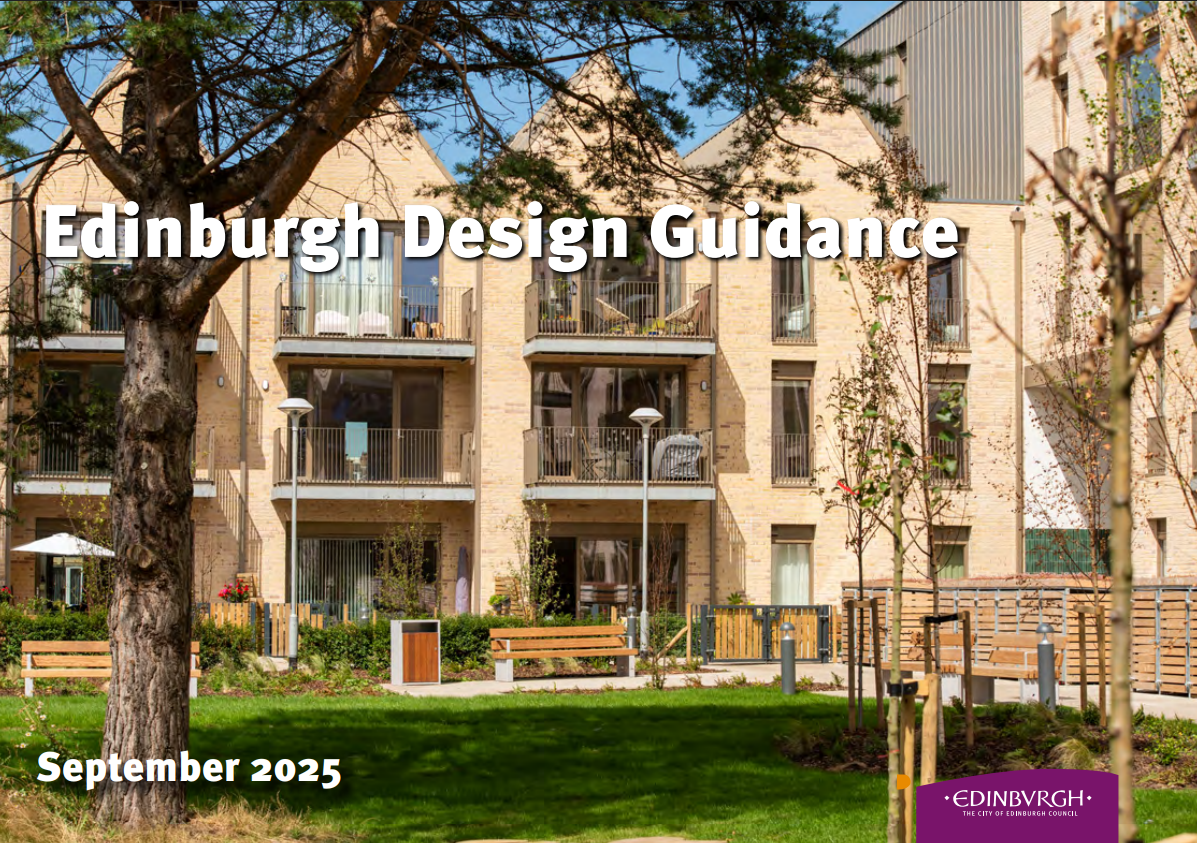
Edinburgh Design Guidance – this should be used for the planning and design of new development proposals and for street design.
Guidance for Householders – this is for people considering altering or extending their home, and for professionals involved in the application process.
Student Accommodation Guidance – this is for professionals and developers involved in the provision of purpose-built student accommodation including new build, change of use and conversion.
Developer Contributions and Infrastructure Delivery Guidance – this will be used to assist in assessing planning applications including the provisions to include legal agreements requiring contributions towards delivering infrastructure associated with development.
You can see all our Planning Guidance and Planning Quick Guides here
With partners, the Council has prepared a Draft Air Quality Action Plan that aims to reduce Particulate Matter (PM10) pollution in the Salamander Street Air Quality Management Area (AQMA), Leith.
The plan outlines how air quality issues will be tackled, to meet and sustain statutory air quality objectives, under four themes:
Industrial
Roads and Transport
Development Management
Information to the Public
Emissions from industry, transport and fugitive sources, including port activities and construction sites, will be addressed.
The Council’s priorities and drivers for pursuing actions to improve air quality are based on public health principles. Air pollution is associated with many adverse health impacts. It is recognised as a contributing factor in the onset of lung and heart disease, as well as cancer, and evidence is growing in respect to links between air pollution and a decline in mental ability and dementia.
Additionally, air pollution particularly affects the most vulnerable in society: children and older people, and those with pre-existing health conditions. The annual health cost to society of the impacts of particulate matter alone in the UK is estimated to be around £16 billion.
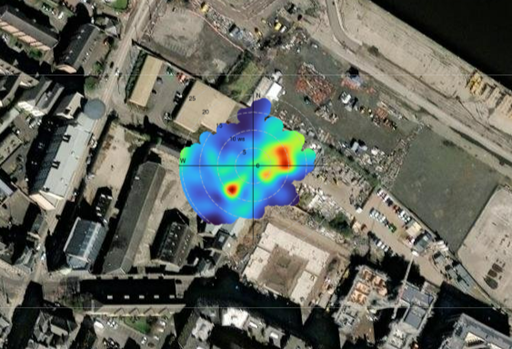
Polar Plots of PM10 Data at Tower Street in 2024
City Plan 2030 highlights Edinburgh Waterfront area as an opportunity for large scale mixed-use regeneration to help meet the city’s growth needs, particularly for new housing. The City Plan identifies areas for housing-led mixed-use development sites in various ownerships in the Salamander Street AQMA. Some of this land was previously allocated for industry. Other parts of the Port of Leith will continue as industry and the future focus is on the development of Low Carbon / Renewables Enterprise Areas and industry as part of the Green Freeport.
Introducing sensitive uses such as residential properties into an area of poor air quality requires to be undertaken carefully with the appropriate consideration of pollution exposure, potential mitigation and programming of development.
Dust and PM10 emissions from demolition and construction can also be a source of pollution especially for existing residential properties. Such emissions occur during the preparation of the land e.g. demolition, land clearing, and earth moving, and during construction, with a proportion from site plant and road vehicles moving over temporary roads and open ground. If mud is allowed to get onto local roads, dust emissions can occur at some distance from the originating site.
Using the Scottish Government’s R-OpenAir analysis tool, with locally collected pollution data and meteorological data we have been able to show (in the Polar Plots below) that high concentrations of PM10 were associated with known demolition and construction works in 2024.
Developers and landowners need to work together, with the local community and the Council to help reduce this local impact. Control measures such as reducing deliveries by road, vehicle wheel washing, road sweeping/washing, and the use of dust suppressants would all be relevant in addition to general on-site management, mitigation and good practice.
The Council wants to engage with businesses operating in the area or those with interests in the land. One of the actions of the Draft Action Plan is to set up a forum with the Council, housing developers, landowners, businesses and community groups to address the cumulative impact of development on environmental protection matters.
In the meantime, however, we want to hear your views about all the actions in the Plan.
Get in touch by email spatial.policy@edinburgh.gov.uk or via post to the City of Edinburgh Council, Level G.4, Waverley Court, 4 East Market Street, Edinburgh, EH8 8BG.
If you require a different format or translation, please also get in touch.
The consultation is seeking views on the Draft Action Plan by 7th September 2025. Thereafter your participation in the local forum would also be welcome.
This fantastic accolade highlights the exceptional efforts of everyone in the service and celebrates their commitment to enhancing our community and making Edinburgh a wonderful place to live.
Additionally, Rowanbank Gardens, a housing development in Corstorphine, received a commendation in the Best Project category. It’s brilliant to see this project recognised for its quality and positive impact on the community, reinforcing our mission to create inclusive and vibrant neighbourhoods.
The crowning achievement was when the Edinburgh Futures Institute was named the overall winner. This remarkable project, which saw the transformation of the former Royal Infirmary of Edinburgh at Quartermile, demonstrates the qualities of good planning and working in partnership. It’s not just about the buildings; it’s about how we design spaces that uplift and engage our community.
These awards remind us that skilled planners and all those involved in the planning process are key to delivering these successful projects, and their hard work genuinely makes a difference in our daily lives.
As we look forward to the national RTPI awards in London later this year, we couldn’t be prouder of what the team has achieved.
In addition to these exciting achievements, we’re also celebrating our Building Standards team, who recently won the Local Authority Building Standards Scotland Awardsfor Customer Focus. This recognition underscores our ongoing commitment to excellence at the City of Edinburgh Council.
This is a very special time to welcome International Biodiversity Day 2025, as Edinburgh celebrates a very important biodiversity anniversary this year. There is a long history of partnership working for biodiversity in the city and this year marks 25 years of the Edinburgh Biodiversity Partnership.
May is a great month to celebrate biodiversity and enjoy spending time in nature, and Edinburgh has some very special places to see nature – all year round!
We are really fortunate to have some amazing wildlife across our city, and this includes fantastic species like otters who have returned to our rivers and burns in recent years.
This month sees the return of Swifts, a bird which comes here just to breed and relies entirely on buildings for nesting sites. However, the nature crisis is well documented and there continue to be declines across all species groups globally and in Scotland. This is due to habitat loss, poor habitat management, pollution, invasive species and disease. Extreme weather caused by our changing climate can also have a negative impact through droughts and flooding. Climate change also makes some of the other threats worse, such as the spread of pests and diseases.
Tackling these challenges and supporting the recovery of nature requires a step change in land use planning and embedding positive effects for biodiversity into new developments.
Integrating nature at the design stage and creating nature positive places is good for health and wellbeing as well as biodiversity. It also supports resilience in the built environment to the impacts of climate change from overheating and extreme rainfall.





 Planning Edinburgh
You must be logged in to post a comment.