
City Plan 2040 Engagement: What Makes Good Place?

Graphic of typical things you might see in a neighbourhood (coffee cup, house, tree, bike, bus) fitting together like a jigsaw. Test reads: What makes a good place? Tell us about where you live in.

We know that Edinburgh is not just one place, but it is made up of many different areas. Each with its own good points and challenges.

We need to get an understanding of each area, what it’s like to live there and what we need to plan for in City Plan 2040.

To gather people’s views, we have launched a public engagement asking people ‘what they think about where they live’.

The questionnaire covers the important things that make a good place such as homes, local shops and services, healthcare, public transport, open space, play facilities, community space and jobs .

If you live in Edinburgh, you can find out more and fill in the questionnaire on our Consultation Hub here

There are also a series of drop-in events:

  • Monday 3 November at the Waverley Court (Hawthorn Learning Space) from 14:30-19:30
  • Saturday 8 November at the Gyle Shopping Centre (Main Concourse) from 12:00-15:00
  • Tuesday 11 November, Kirkliston Parish Church Hall from 15:30-18:30
  • Wednesday 12 November, Sighthill Library/ Gate 55 from 16:00-19:00
  • Monday 17 November at Oxgangs Library (Community Room) from 16:00-19:00
  • Tuesday 18 November at Drumbrae Library Hub (Parkgrove Room) from 15:30-19:00
  • Wednesday 19 November at Magdalene Community Centre from 15:30-19:00
  • Friday 21 November at North Edinburgh Arts Centre (Theatre Suite) from 16:00-19:00

Saturday 17 January 2026 at Cameron Toll Shopping Centre from 11:30-14:30

City Plan 2040 Update

City Plan 2040 will be our next local development plan after City Plan 2030.

There are several formal stages that we need to go through as we prepare City Plan 2040. We have produced a Development Plan Scheme which explains these stages and sets out the timetable for the plan preparation.

Currently, we are working on our Evidence Report which is the first stage of preparing a local development plan. This will contain topic papers on a wide range of issues.

The Evidence Report will provide a baseline of information and what we might need to address in City Plan 2040.

Air Quality in the Salamander Street area

With partners, the Council has prepared a Draft Air Quality Action Plan that aims to reduce Particulate Matter (PM10) pollution in the Salamander Street Air Quality Management Area (AQMA), Leith.

The plan outlines how air quality issues will be tackled, to meet and sustain statutory air quality objectives, under four themes:

  1. Industrial
  2. Roads and Transport
  3. Development Management
  4. Information to the Public

Emissions from industry, transport and fugitive sources, including port activities and construction sites, will be addressed.  

The Council’s priorities and drivers for pursuing actions to improve air quality are based on public health principles. Air pollution is associated with many adverse health impacts. It is recognised as a contributing factor in the onset of lung and heart disease, as well as cancer, and evidence is growing in respect to links between air pollution and a decline in mental ability and dementia.

Additionally, air pollution particularly affects the most vulnerable in society: children and older people, and those with pre-existing health conditions. The annual health cost to society of the impacts of particulate matter alone in the UK is estimated to be around £16 billion.  

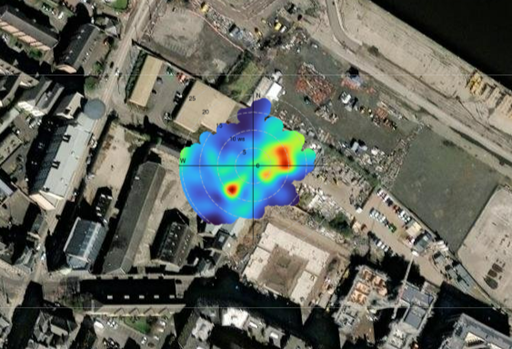
Polar Plots of PM10 Data at Tower Street in 2024

City Plan 2030 highlights Edinburgh Waterfront area as an opportunity for large scale mixed-use regeneration to help meet the city’s growth needs, particularly for new housing. The City Plan identifies areas for housing-led mixed-use development sites in various ownerships in the Salamander Street AQMA. Some of this land was previously allocated for industry. Other parts of the Port of Leith will continue as industry and the future focus is on the development of Low Carbon / Renewables Enterprise Areas and industry as part of the Green Freeport.

Introducing sensitive uses such as residential properties into an area of poor air quality requires to be undertaken carefully with the appropriate consideration of pollution exposure, potential mitigation and programming of development.

Dust and PM10 emissions from demolition and construction can also be a source of pollution especially for existing residential properties. Such emissions occur during the preparation of the land e.g. demolition, land clearing, and earth moving, and during construction, with a proportion from site plant and road vehicles moving over temporary roads and open ground. If mud is allowed to get onto local roads, dust emissions can occur at some distance from the originating site.

Using the Scottish Government’s R-OpenAir analysis tool, with locally collected pollution data and meteorological data we have been able to show (in the Polar Plots below) that high concentrations of PM10 were associated with known demolition and construction works in 2024.

Developers and landowners need to work together, with the local community and the Council to help reduce this local impact. Control measures such as reducing deliveries by road, vehicle wheel washing, road sweeping/washing, and the use of dust suppressants would all be relevant in addition to general on-site management, mitigation and good practice.

The Council wants to engage with businesses operating in the area or those with interests in the land. One of the actions of the Draft Action Plan is to set up a forum with the Council, housing developers, landowners, businesses and community groups to address the cumulative impact of development on environmental protection matters.

In the meantime, however, we want to hear your views about all the actions in the Plan.

Get in touch by email spatial.policy@edinburgh.gov.uk or via post to the City of Edinburgh Council, Level G.4, Waverley Court, 4 East Market Street, Edinburgh, EH8 8BG.

If you require a different format or translation, please also get in touch.

The consultation is seeking views on the Draft Action Plan by 7th September 2025.  Thereafter your participation in the local forum would also be welcome.

Replacing Your Windows

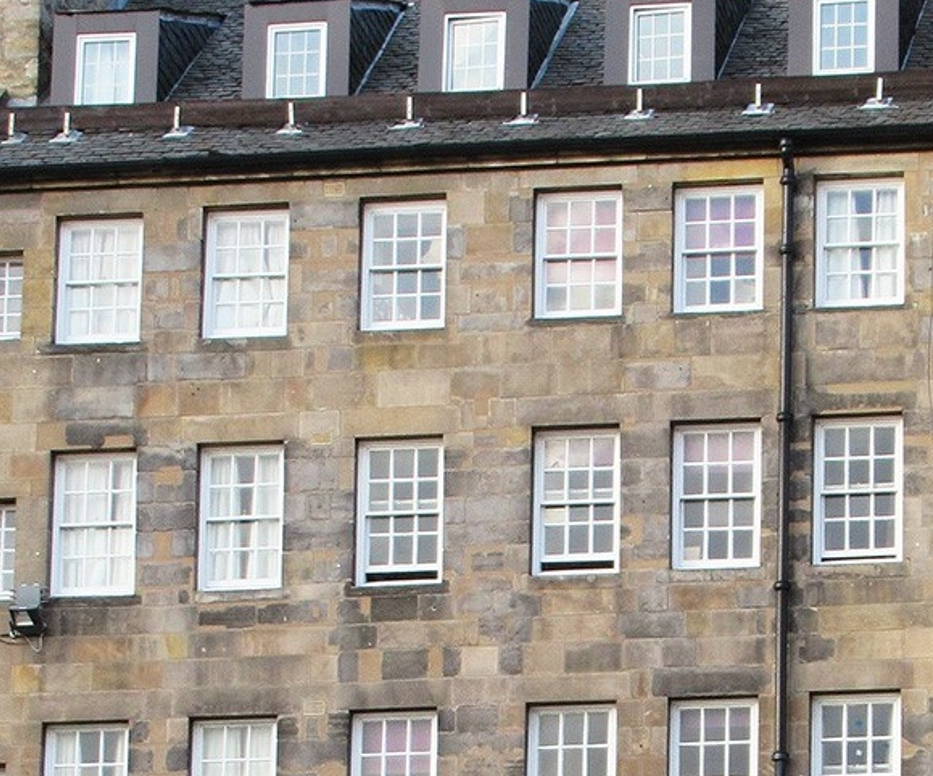
Close up of some traditional Edinburgh tenement windows.

In May 2024 legislation came in that changes the need for planning permission for the replacement of windows in certain circumstances.

If your property is in the World Heritage Site or a listed building then these changes do not affect you and should you continue to apply for planning permission/ listed building consent.

If your property is in a Conservation Area the Permitted Development Rights have changed which means you may be able to alter or replace your windows without requiring planning permission.  Alterations to windows to the rear of a property that is not a principal elevation (the elevation of the original dwellinghouse which by virtue of its design or setting, or both, is the principal elevation) or a side elevation that doesn’t face a road do not require planning permission.

Applications for Prior Approval can now be submitted to determine the acceptability of windows on the front/principal elevation and side windows facing a road.  This allows the Planning Authority to consider whether the proposed replacements will need  planning permission.  The prior approval will consider the following matters:

If the proposals significantly alter the character of the original windows, then it is likely that the Prior Approval will be refused and an application for Planning Permission would be required.  Further guidance on the acceptability of replacement window can be viewed in our planning guidance on listed buildings and conservation areas .

Applications for Prior Approval must contain a location plan, description of the proposed replacement windows and a fee of £200.  Forms can be downloaded at eplanning Scotland and submitted by email to us via planning@edinburgh.gov.uk.

If your property is outwith the World Heritage Site, a Conservation Area or is not a listed building then you do not need planning permission to replace your windows. Check if your building is in a Conservation Area or listed on our website here.

Have a look at our Quick Guide to Windows for more information. Full details on Altering or replacing existing windows is online in Planning circular 1/2024: householder permitted development rights.

National Customer and Stakeholder Satisfaction Survey

You’re invited to share feedback on your recent experience with Edinburgh as a planning authority.

The National Customer and Stakeholder Satisfaction Survey is live from Monday 18 November for 3 weeks. It is being undertaken by the National Planning Improvement Team in the Improvement Service.

You can find the survey here.

The survey is intended to be filled out by all users of planning authorities in Scotland to collect your views on the service you have received.

This is your opportunity to say what is working and where improvements could be made.

It should only take a few moments of your time, it is completely anonymous, and all your responses help planning authorities improve their offer to you.

The National Planning Improvement Team will publish the results of the survey at the beginning of 2025 and each planning authority will be provided with a breakdown for their area.

The Survey will be an annual survey undertaken by the National Planning Improvement Team in the Improvement Service. This survey is intended to be filled out by all users of the Planning Authorities in Scotland to collect views on the service received.

This is your opportunity to say what is working and where improvements can be made in Planning at the City of Edinburgh Council.